
I see DesireX as a name that can turn a founder’s taste into a clear public proposition. In this concept, I am outlining the choices that would make the idea credible, useful, and distinct.
Name the question
Perhaps you already publish essays, interviews, images, or a letter that readers save. I would gather that work under DesireX around a question with endless energy: what makes us want something? The answer can move through design, food, fashion, collecting, work, status, and private longing. The subject is broad, but the name gives every piece a clear charge. Readers know why these different stories belong together.
A journal under this address can take desire seriously without treating every story as a shopping prompt. Independent titles such as Kinfolk and Apartamento offer useful comparisons for a publication with a clear editorial world. It can ask how taste forms, why certain objects gather meaning, and what a maker chooses to withhold. Your existing audience does not need to be abandoned. DesireX offers that audience a stronger editorial home and gives new readers a phrase they can remember after encountering one exceptional piece.
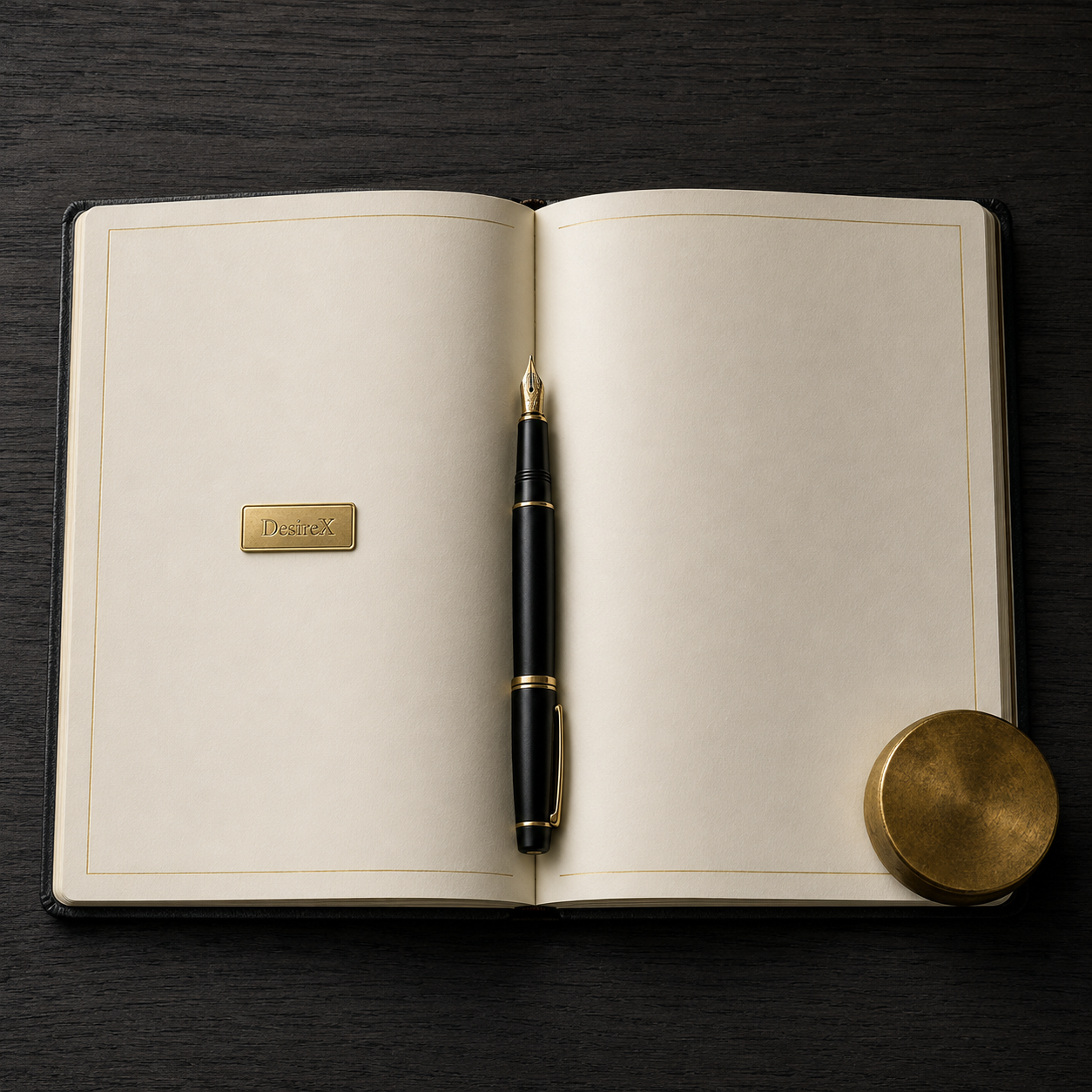
Build an issue worth keeping
The first issue can revolve around one live idea such as imitation, appetite, devotion, or excess. A focused theme lets unlikely stories illuminate one another. A furniture copy can sit beside a fragrance interpretation. A conversation with a collector can follow an essay about letting go. The issue gains shape through contrast, and each contribution earns its place by revealing something about how wanting works.
Recurring forms can make the publication familiar without making it predictable. One object might receive a close reading. One room might be documented through the choices inside it. A working artist might share five references and explain their effect. A short field note can capture a storefront, auction, meal, or fitting. Readers begin to anticipate these forms while the subjects keep changing.
Let the point of view show
Independent publishing becomes valuable when an editor makes real decisions. The Gentlewoman is a strong reference for the authority a consistent editorial position can build, while MagCulture shows the range a distinct independent magazine can occupy. DesireX should choose stories because they sharpen the central question, not because they arrived in a crowded inbox. Praise can be precise. Criticism can be fair. An interview can retain uncertainty. The reader should feel a human mind arranging the issue, making connections, and refusing pieces that add noise without insight.
That standard can extend to the visual work. Original portraits, still lifes, documents, and location photography give the journal its own record. Images should reveal something the text cannot carry alone. Captions can reward attention. The page itself can remain calm enough for long reading and bold enough that an issue feels like an object. DesireX has the graphic strength to hold both modes.
Make attention the offer
A reader can find endless recommendations elsewhere. The journal’s offer is considered attention. A writer spends time in the studio, returns to a difficult question, and finds the detail that changes the story. An editor shapes the piece until its argument holds. That care gives people a reason to subscribe, forward an issue, or return to an archive long after the publishing date.
A free letter can open the door with one strong idea and a few well-described paths into the publication. Membership can support complete issues, audio, notes, gatherings, or an annual printed edition. The arrangement should be plain. People pay because the work helps them notice more and because they want that work to continue. DesireX makes the value proposition emotionally legible before the membership page explains it.
Create a publication with a room
The journal can occasionally leave the screen. A small salon, an object study, or a conversation around one issue gives readers a shared experience of the editorial idea. The event does not need a stage and a large crowd. Twenty attentive people with a good question can create material for the next piece and deepen the connection among readers, contributors, and editors.
A printed annual can serve a different purpose. It can preserve the best work, commission new images, and give the publication weight in the hand. The web remains alive and searchable; paper becomes the concentrated object. Both carry the same name. Over time, the archive, issues, gatherings, and editions make DesireX feel like a cultural address rather than another stream of posts.
Publish before someone else does
DesireX is unusually direct for a journal about taste and appetite. It names the force under every assignment while leaving room for surprise. The X can change with each issue, becoming the object, person, system, or memory that turns interest into want. The domain reads naturally in a masthead and sounds clear when a contributor mentions where a story will appear.
If the publication already exists in fragments, delay has a cost. Another owner can establish the name in culture and make your eventual version feel secondary. Securing DesireX.com lets you consolidate the work while its meaning is still open. You can acquire the domain and direct it independently, or propose a partnership around a developed editorial plan. The conversation should begin with the first issue you cannot stop thinking about.

Michael Santiago
Michael Santiago finds and develops category-defining domains through OnlineBusiness.com. After more than a decade building Newswire.com, he now applies that experience to distinctive names and focused businesses.