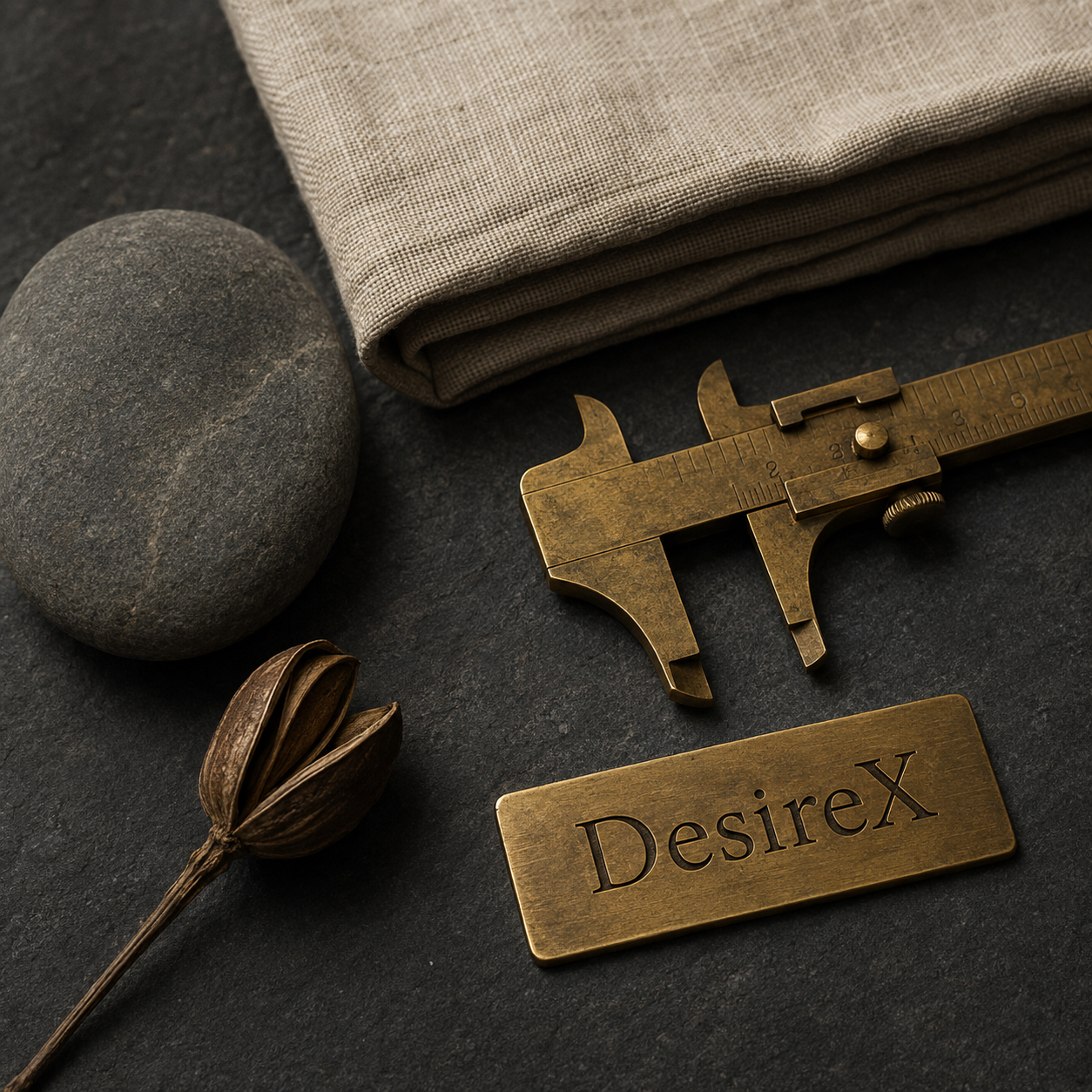
I see DesireX as a name that can turn a founder’s taste into a clear public proposition. In this concept, I am outlining the choices that would make the idea credible, useful, and distinct.
The name above the door
Perhaps you already know the first object. I can imagine it as a chair you have refined for years, a group of vintage pieces you know how to find, or a material practice ready for a larger audience. DesireX gives that instinct a public address. The name can sit above a tightly edited shop, in the company of design destinations such as The Future Perfect and Collectible, or a collector-led business without explaining away the mystery that makes a person look twice. It feels selective before the first product appears.
That first impression matters because objects travel through conversation. Someone remembers the lamp, then asks where it came from. Someone sees a small mark on the box and searches it later. DesireX is short enough to survive that exchange and broad enough to hold the collection as it changes. Your eye remains the reason to visit. The name simply gives that eye a form people can recall, return to, and recommend.

Start with your strongest taste
The opening collection does not need to prove every possible future. It needs to make one convincing statement. Twelve pieces can establish a world if the relationship among them feels intentional. A severe steel table, a warm hand-thrown vessel, and an unfamiliar piece of jewelry might belong together through proportion, finish, or attitude. The connection comes from your judgment. DesireX lets that judgment become the product instead of hiding behind a generic store description.
You may already sell through appointments, social messages, fairs, or a smaller label. Those channels have value and should be honored. A category address adds a center. It gives buyers a place where the full standard is visible, where every photograph and description carries the same voice, and where an archive can accumulate. The move can be gradual. The important step is claiming the name before another owner gives it a different meaning.
Make selection feel personal
People who buy unusual objects want confidence as much as novelty. They want to know why this piece earned its place, how it feels at human scale, and what will happen after they commit. The buying detail established by 1stDibs offers a useful comparable. DesireX can answer with close photography, plain dimensions, condition notes, and a short account of your decision. The tone can still be alluring. Precision strengthens the spell because it tells a buyer that care continues beyond the image.
A founder with existing maker relationships has an immediate advantage. Those conversations can lead to limited commissions, early access, or objects shaped specifically for the house. A founder beginning as a collector can build the same trust one careful introduction at a time. In either case, the brand should feel like a person is present. Recommendations, private previews, and honest answers turn the domain from a polished sign into a place with memory.
Build a living archive
Sold work should remain visible. An archive of past selections shows where the eye has traveled and lets a new visitor understand the standard quickly. Each entry can preserve the maker, materials, scale, and reason it mattered. Over time, those pages become more than old inventory. They show continuity. They also allow a collector who missed one piece to recognize the next opportunity when it arrives.
Editorial work can grow naturally from the objects. A visit to a workshop, a note on a difficult finish, or a conversation about repair gives depth without turning the business into a magazine. The object stays central. The story creates context and a reason to return between releases, much as Artsy gives collectors a wider view around the work. DesireX can hold commerce and observation in the same voice, which is useful for a house whose value depends on seeing what others pass over.
Let the room become real
The digital address can lead to physical encounters. A temporary apartment, a borrowed gallery room, or a private showing gives people time with scale, weight, and surface. The gathering can be small. A dozen objects in a coherent setting often says more than a crowded floor. Buyers meet the point of view in three dimensions, while the resulting conversations sharpen what the next collection should become.
These rooms also create a natural rhythm. A preview for existing clients can precede an open afternoon. Designers can make appointments for their projects. Makers can speak about a process beside the finished work. Nothing requires a permanent lease at the start. DesireX can move while retaining one recognizable address, one invitation, and one standard. That flexibility lets the business test cities and formats without making the brand feel temporary.
The cost of leaving it open
A strong collection can survive under many names, but a name this direct changes how quickly the idea lands. Desire and the unknown meet in one word. It suits the moment before a collector can fully explain why an object has taken hold. On a label, a shipping case, or a quiet storefront, DesireX looks complete. The dot-com gives that feeling a destination with no extra qualifier to remember.
If this is close to the business you are already building, waiting carries a simple risk. Someone else can define DesireX first. Their objects, voice, and customer experience will become the association, and your version will have to work around it. Buying the name now gives your existing work room to become a house. A partnership can also bring the domain into a serious plan. Either path begins with a direct conversation about what you see.

Michael Santiago
Michael Santiago finds and develops category-defining domains through OnlineBusiness.com. After more than a decade building Newswire.com, he now applies that experience to distinctive names and focused businesses.